
Why we forgot memory
AI could accelerate or save our ‘forgetting’ society

‘Memory, you realised long ago, is a game that a healthy-brained person can play all the time, and the game of memory is won or lost on one criterion: do you leave the formation of memories to happenstance, or do you decide to remember?’
Tomorrow and Tomorrow and Tomorrow
Last month, while sitting in Church, I noticed that the experience was designed to support memory. Each week one repeats similar material, for example learning about a section of the Gospels. This is a form of spaced repetition, where you relearn or retrieve knowledge at deliberately spaced intervals to beat the forgetting curve. The sermon is often a theme on this gospel lesson, and arguably a form of elaboration. Churches often have stained glass windows depicting scenes from the Bible (Dual Coding) and you have to remember the Lord’s prayer (retrieval practice). These may not be optimal implementations of these strategies, but the church service preserves older ideas about the importance of remembering.
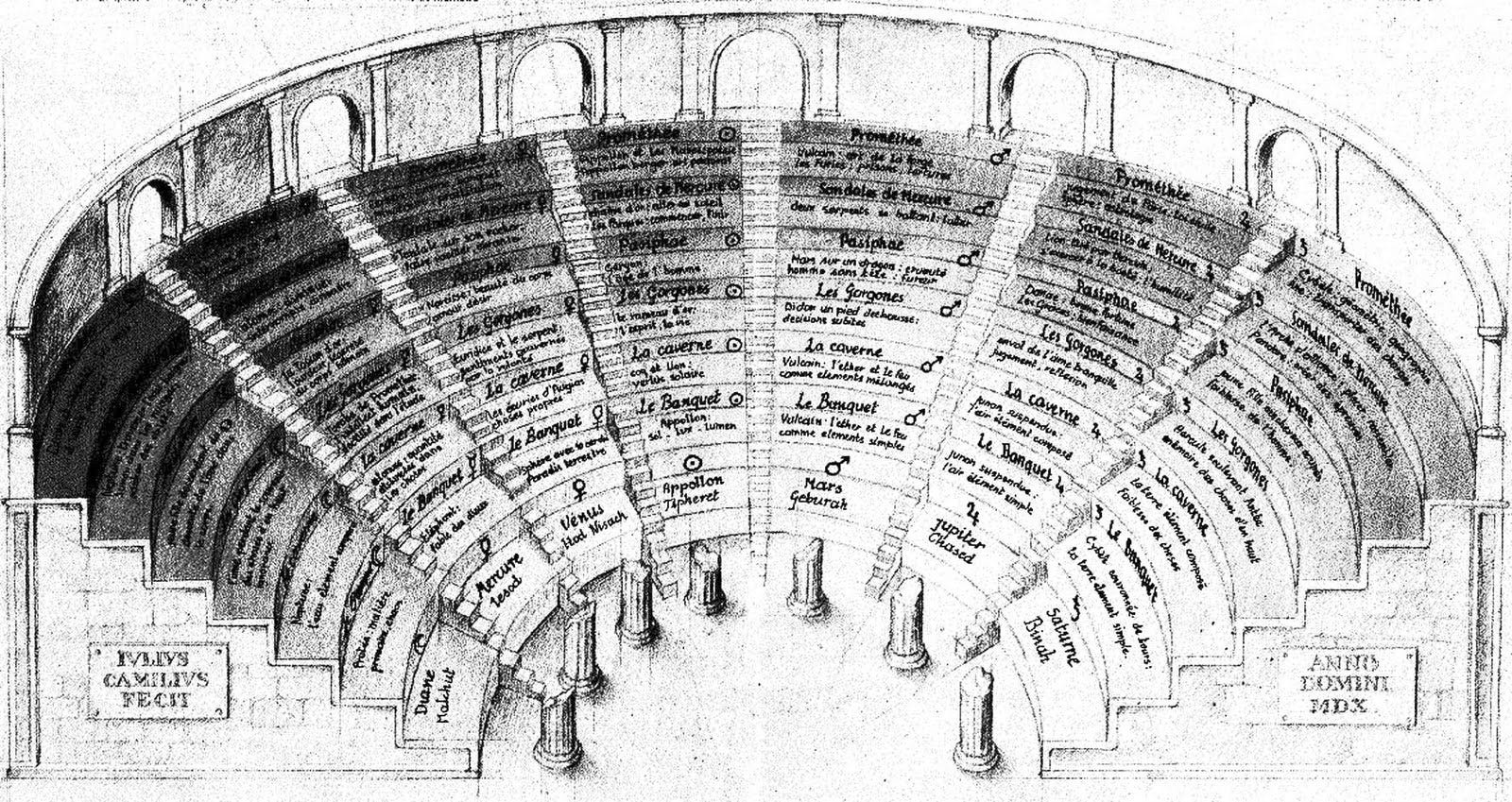
Memory has long been a preoccupation of the Christian church. St Augustine didn’t just think of memory as an information store, but an interior space where divine truths were hidden and God could (through deep effort) be found. He described searching for God via memory: ‘You were within me, but I was outside, and it was there that I searched for you.’1 From Aristotle to Acquinas to Llull, Camillo and Bruno, memory for most of modern European history has been considered a key site of spiritual and moral development.2
By this yardstick I wouldn’t be considered very moral. I forget most of the things I want to remember. I read the news and forget most of it, I forget most of the conversations I have with my friends (even if I want to remember them and find them interesting), I forget the interesting points made in a podcast, or the key learnings I wrote down in my diary or the important sections of a book I read a few years ago. I’ve forgotten most of my degree. When I think of all the important information I’ve forgotten, I also think of all those connections I missed but could have made, the opportunities I didn’t notice and the skills I was never able to fully grasp.
This is not fully my fault. The informational environment of modern life encourages forgetting because it is both a) sparse and b) linear. It is sparse since there are more news sources than ever. This means I am less likely to read the same content as friends. It is linear since the news cycle is short (supported by short-term social media) and stories are forgotten swiftly. This sparsity and linearity means that the opportunities for reinforcing information retrieval are less. In contrast to older forms of knowledge transfer, which tended to be thick and circular (e.g. religious texts which are reinforced via mantras or repetitive prayers or the circular oral style of storytelling, for example Homeric poetry) modern content tends to favour linear (more novel but impermanent) forms of information transfer. Content (for example news articles, lectures or informational videos) are also linear in form and tend not to be structured in a way which maximises retention.3
But I still fight hard against the forgetting curve. My ‘knowledge diet’ includes noting down anything I find interesting or worth remembering as a note on my phone (this could be from an article, lecture, conversation etc.). Roughly every 6 months I record content onto post-it notes and try to arrange it spatially, and then lay them out in a diagram. Finally, I dissemble the diagrams and put all the pieces into Anki (a flash card app) as flash cards under a deck called ‘miscellaneous’. This is a much less neat and consistent method in reality and I often forget to note down important information or to look at flash cards.
There are two key decision-points in this process. Firstly, What should I choose to note down? And secondly what should I choose to add to Anki? These are the pieces of information that I will almost certainly remember. However, as a friend recently pointed out when we discussed this, you really don’t want to remember everything. Taken to its extreme, remembering everything will leave you paralysed by detail. This is the topic of Borges’s story Funes Memoralis where Funes is unable to understand that a dog, when on one side of the room, is the same dog when it moves to the other side of the room. He is weighed down by the countless details that he cannot forget, meaning he can’t abstract to understand the concept of a dog. In this sense forgetting is critical to thinking.4
AI has the potential to make the process of memorising effortless, and create an artificial memory system that would astound Ramon Llull. I think it’s possible (maybe even likely) that LLMs will soon allow us to remember whatever information we come across in everyday life (digital or analogue) effortlessly. If this is the case, then a key question might become ‘what do you want to remember?’ This choice might become a critical twenty-first century question for each individual. It might inform (to some degree) how we think, the direction of our creativity, our hopes and desires. It might inject more deliberate choice into a process which is currently still largely determined by chance. In the AI age could we look back at the informational environment of 2025 in a similar way to how we look at fast fashion as ‘single-use’ and throwaway. AI might reawaken the historical importance of memory.
What we remember is, of course, a moral choice. Plato argued that truth is already in us, and learning is just remembering (amnesis) what we had previously forgotten. Therefore, for him forgetting is not only an issue of learning, but has profound implications for our ability to live moral lives. In a frantic world it’s easy to forget wars, the downstream consequences of taking a flight or climate breakdown. Therefore, if AI helps us beat the forgetting curve for good, memory might become the site of not only important choices about learning, but about morality too.
Mary Carruther’s The Art of Memory is a masterly explanation of the important role artificial memory techniques played in European thought.
This is also true in other regions.
For an example of pneumonic content that is structured to be remembered effortlessly see Quantum Country by Andy Matushak and Michael Nielsen. As an aside, our linear and sparse information environment is mirrored by our linear concept of time versus older more circular concepts of time (see Time’s Arrow, Time’s Cycle).
This is also an important difference between humans and LLMs. Forgetting is not an in-built feature of LLMs (only by deliberately training a model to forget - ‘Machine Forgetting’ - can they do so). This may be one reason for the limitations of LLMs (namely its inability to do ‘strong generalisation’ and compositional novelty).