

On February 6, 2026, Alibaba invested 3 billion yuan giving away free boba tea. They wanted to get hundreds of millions of consumers to delegate their purchasing decisions to AI agents. 10 million orders were placed in 9 hours. 1.56 million people over the age of 60 made their first online purchase by delegating the task to AI, skipping traditional e-commerce.
AI agents take actions and decisions autonomously. This makes them potentially very helpful but also very dangerous. The virality of Openclaw, an AI agent that you can install on your computer to take actions, shows that the AI agent economy is already here, it’s just unevenly distributed. But many believe this is just the tip of a much larger agentic wave that could transform our economy and society. As Tomasev et al argue ‘The rapid adoption of autonomous AI agents is giving rise to a new economic layer where agents transact and coordinate at scales and speeds beyond direct human oversight’. If AI agents are interacting 24 hours per day at incredible speed this will be a lot of economic activity. Unlike with the human economy, there is no ‘natural’ in this scenario. The AI agent economy will be deliberately built in our image
This could lead to a collapse in coordination costs and therefore unleash a new era of bottom-up coordination. But it could also introduce agent swarms which threaten democracy. Both could be true. Some have asked if we could see recursive self-improvement for AI agents.
Companies like Google, stripe, coinbase and Alibaba have recognised this and are already building the infrastructure that this economic layer will work on. Researchers at Google Deepmind have argued that the window for democratic input into this new and potentially transformative layer in our economy & society is closing fast.
Will this play out in the same way as other protocol competitions, for example internet (tcp/ip) and payments (visa/SWIFT) infrastructure? As Adam Tooze has pointed out, AI was ‘born contested’ into a more geopolitically fraught world than the internet or digital payments. The winners in each layer of the AI agent infrastructure stack are not yet clear but geopolitical competition is relevant in every tier.
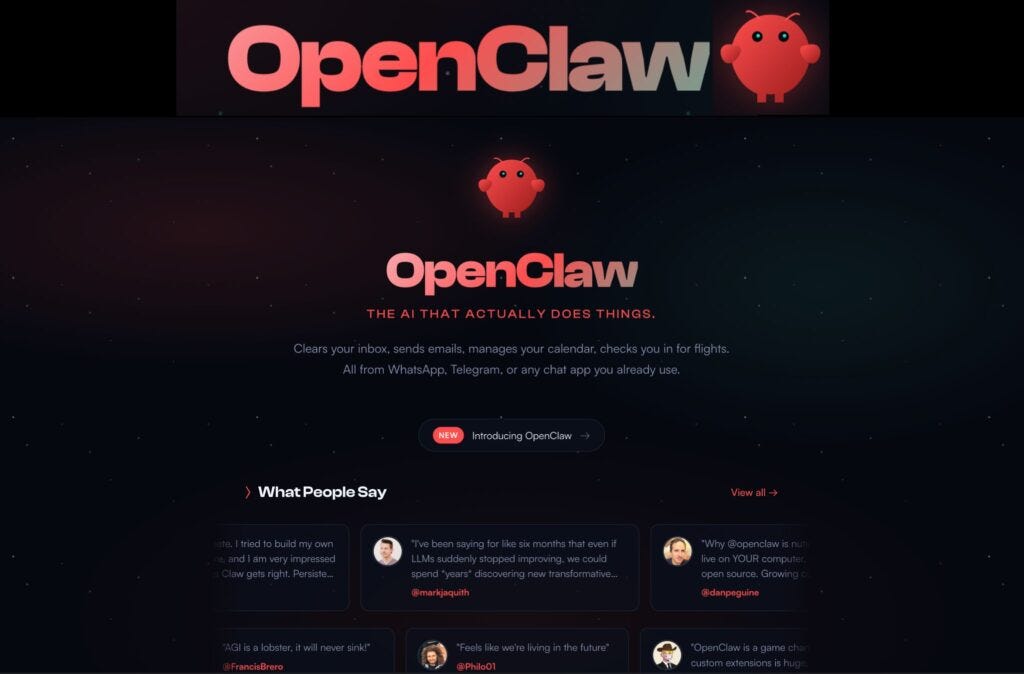
While the US AI dominates capabilities, China’s AI strategy is to become the fastest country in the world to diffuse AI. According to Grace Shao, China’s approach to AI is markedly different from the US (promoting fast, frugal open weight models that are quickly woven into the economy): ‘Chinese companies integrate open-source models into daily life because speed-to-market incentives pay off fastest at the application layer’. This strategy has historical track record, as detailed by Jeffery Ding in ‘Technology and the rise of Great Powers’. So much does the Chinese strategy track to Ding’s analysis that he is repeatedly asked whether the Chinese CCP is reading his work.
This partly explains why Openclaw went viral in China in a way that it didn’t elsewhere. Instead of building an alternative (as Anthropic did), Chinese cloud providers rapidly released their own open-source version or integration (Tencent’s WorkBuddy, Minimax’s MaxClaw, Moonshot’s Kimi Claw were all on-click deployments) as millions in China started ‘raising lobsters’. Remarkably, local governments even subsidised adoption, despite the central Chinese government (MIIT) reporting concerns over potential security leaks using OpenClaw. henzhen and Wuxi announced the "Ten Measures for Lobster" and "Twelve Measures for Raising Lobster" respectively. Not only has Openclaw usage in China greater than usage in any other country, but Chinese models are the most widely used on openclaw globally. 61% of OpenRouter’s top 10 model token use in late February were Chinese. Given how many tokens are used in the AI agent economy, Chinese models have a distinct advantage.

Baidu Offices, 17th March 2026: Millions in China are ‘raising Openclaw Lobsters’
The communication Layer
If AI agents are to operate outside of human oversight they need to communicate with one another. There is currently a standards battle to build the protocol to enable this and America is winning. Google’s Agent2Agent protocol (A2A), launched in April 2025 (and transferred to the Linux Foundation two months later) has a solid institutional coalition supporting it, which is important for infrastructure standards, including backing from over 150 organisations including Microsoft, AWS, and Salesforce and some enterprise deployments already running. But the agent communication protocol with the most adoption is Anthropic’s Model Context Protocol. MCP grew rapidly after it was developed by an Anthropic engineer, and other labs (such as Google) adopted it.

China doesn’t seem to be building competing open protocols at this layer. China’s strategy tends towards vertical integration so that protocols become unnecessary. For example, you can book flights with Alibaba’s Qwen, pay or it through Alipay and then confirm delivery with Cainiao (also part of Alibaba) then you don’t need cross-platform communication protocols.
Instead of protocols China might win through faster deployment. Based on historical precedent, the race to become the default agent communication infrastructure in Southeast Asia, Latin America, and Sub-Saharan Africa is not being won may be won through deployment and network effects. Although in many ways the US leads China in terms of AI development, China’s AI+ strategy is less about capability than deployment. In terms of consumer agent commercial applications China is deploying very rapidly.
This hasn’t gone entirely well, and there have been examples of data poisoning leading to AI agents recommending fake products, which is a warning about what deployment without governance looks like. In March 2026, China's state broadcaster CCTV exposed AI chatbots recommending a fictitious smartwatch with "quantum-entanglement sensors" — the result of deliberate manipulation of AI training data by advertisers. A 35 billion yuan industry of "generative engine optimisation" had already emerged, built on getting AI agents to recommend paying clients. China's agent economy is the most advanced in the world for consumer commerce. It is also the first to demonstrate that agent-scale deployment without governance frameworks produces market manipulation at agent scale.
The Payment Layer: The New Visa Race?
As well as communicate, if agents want to operate independently they need to be able to pay for things. Payments may have stronger network effects than communication protocols because whoever owns the payment layer runs the potentially very lucrative economic infrastructure of the agent economy.
To understand the importance of payments let’s consider visa, one of the dominant payments protocols in the real world. Visa makes money by 1) charging a percentage of transaction volume charged to banks using visa cards 2) data processing fees charged per transaction for routing and the logistics of settlement 3) international transaction fees. Visa processes 200b transactions per year, has a revenue of $30b and has 30k employees. Essentially, visa is equivalent to a toll-road fee. The costs are mainly fixed and they extract rent from a large proportion of those using digital transactions in the world. Visa was established in 1976 as a cooperative owned by a set of US banks but in 2008 became a publicly traded corportation and their global dominance owes a lot to the fact that the dollar is the global reserve currency.
We now know that pieces of economic infrastructure are considered faregame as geopolitical tools. SWIFT (the Society for Worldwide Interbank Financial Telecommunication) was founded in in 1973 to enable bank-to-bank transactions with a standardised communication format. It was a cooperative of banks, and headquartered in Belgium for ‘neutrality’ purposes. Today there are over 11000 financial institutions across 200 countries embedded in the SWIFT system. Hopwever, in 2012 Iranian banks were disconnected from SWIFT and in 2022 Russian banks were, revealing that it was in reality a piece of US infrastructure. Partly for this reason China is developing mBridge as an alternative digital bank-to-bank transaction system. Saudi Arabia and UAE are members, raising the question of whether increasing volumes of gulf-Chinese energy transactions might signal an unwinding of the petrodollar system (though Saudi oil exports are still settled in USD). while the West is developing a rival Project Agorá, involving the New York Federal Reserve, Banque de France on behalf of the ECB, the Bank of Japan, Swiss National Bank, and Bank of England. Perhaps AP2 and Alipay are competing for the role that Visa and the petrodollar system played in the 20th century. default payment infrastructure that confers structural power on whoever owns it. However, given that we live in a more multi-polar moment than 1976, US organisations winning the AI agent payment layer is not a foregone conclusion.
At least three visions are competing. OpenAI and Stripe’s Agentic Commerce Protocol is the conservative option. It involves using existing card infrastructure for agents, so we essentially keep the current payments system we have (visa, mastercard, ACH, SEPA). It is the only agent payment system already in consumer-scale production in the US and is live inside ChatGPT’s checkout.
Google and Coinbase’s Agent Payments Protocol (AP2) is more ambitious. It would work across cards, bank transfers and stablecoin settlement. Stablecoins are cryptocurrencies pegged 1:1 with a fiat currency (almost always USD). The Coinbase and Cloudflare x402 is the most radical part of this. It makes payment as native to a web request as a hyperlink, settling in stablecoins at near-zero cost. Credit card infrastructure arguably cannot economically handle the transaction volumes agents generate at machine speed but they are betting that x402 can.
AP2 is positioning itself as the layer at which agent transactions are authorised, priced, settled, and recorded. That is structurally similar to what Visa does. Arguably if AP2 succeeded it would be more dominant than visa. For example, a merchant in the real economy who doesn’t like Visa’s terms can accept cash instead. In an AI agent economy operating at machine speed with no human in the loop that exit option may not exist. The network effects of a dominant agent payment protocol might therefore be more total than Visa’s and the transaction data more intimate. For example, the data might cover the items purchased, but also what the agent was asked to find by a human.
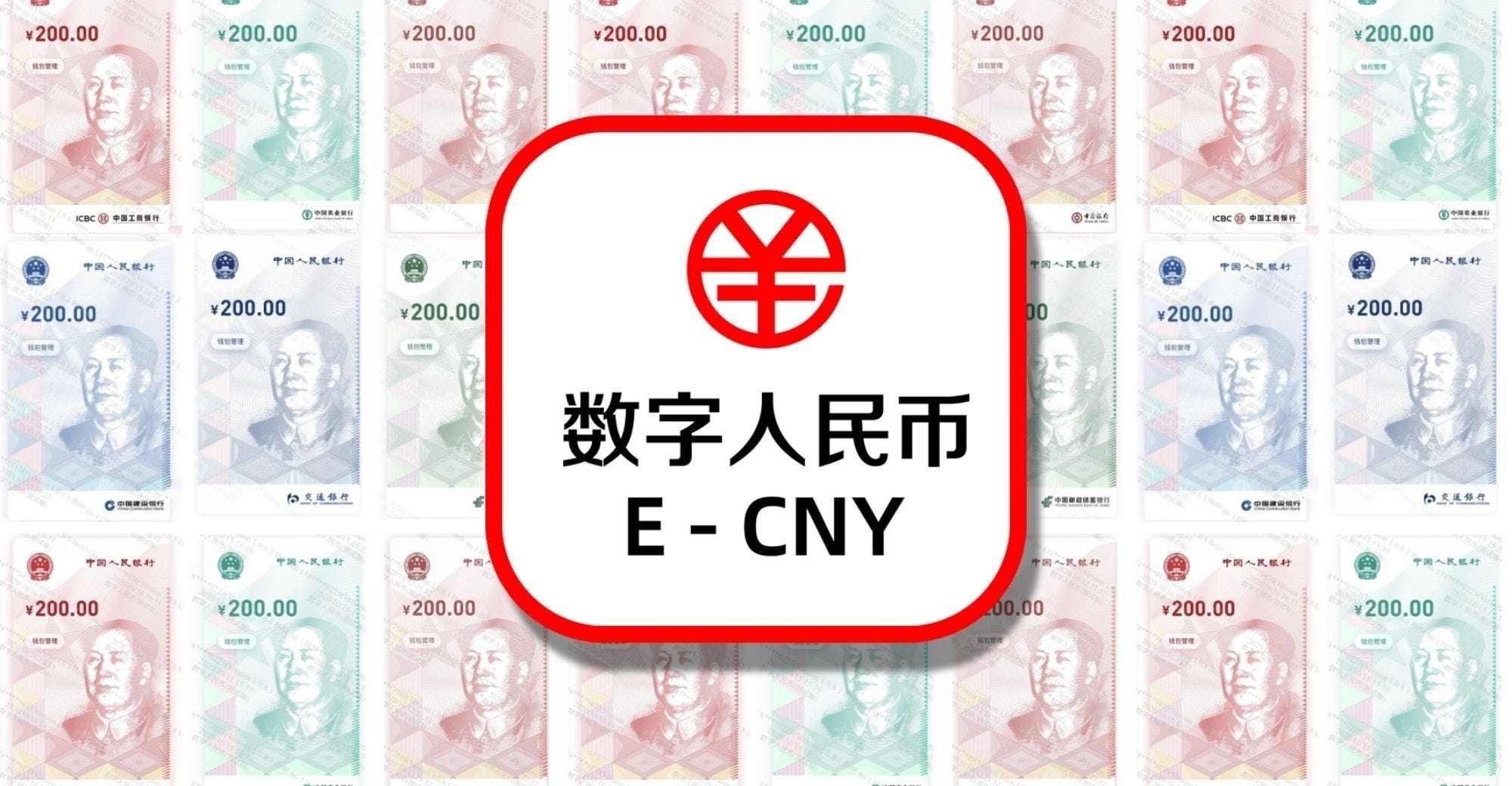
The Chinese picture is different. There is no standards contest because it has already been resolved by deployment. Alipay’s AI Pay was processing 120 million weekly agent transactions by early 2026, making it the first AI agentic payment service to reach that scale globally. But the most important difference is sovereignty. The e-CNY’s mBridge infrastructure, designed explicitly as an alternative to SWIFT and dollar-denominated settlement, surged to $55.49 billion in cross-border transaction volume in 2025.
This may produce an asymmetry. It’s possible we will see a private US payments layer for the AI agent economy and a state-backed Chinese layer. Will these be compatible?
The Identity Layer
Agents are slippery. How can they have a coherent and stable identity when you can quickly spin them up or down, merge them, update them? How does agent persistence relate to human identity persisting?
In order for the ai agent economy to function each agent needs to answer three questions: who authorised it to act? what is it permitted to do? and who is accountable when it goes wrong?
As with the payments layer, the ideas and infrastrucutre built for web3 and crypto is being put forward as a potential solution. For example, each agent could have a ‘Decentralised identifier’ (a unique identifier - like a username - that is controlled by the person it belongs to, rather than a centralised authority) and ‘Verfiable Credentials’ (a digitally signed credential). While AP2 uses these open protocols (DIDs and Verifiable credentials) there is also a rules layer which answers some of the governance questions about which agents are allowed to act and to do what. The technical answers to these questions (DIDs and Verifiable credentials) are really embedded in a wider governance system which is highly consequential.
Therefore, with the agent identity layer we might see a similar pattern to the early internet. TCP/IP was open but the layer built on top (e.g. google search) essentially made important governance decisions around what kinds of sites could be shown on the commercial internet.
China’s approach to identity is solved by the same mechanism that solved it for digital payments. Alipay and WeChat already know who you are, cross-referenced against national ID, payment history, and behavioural data. The state therefore knows what you instructed your agent to do, what it discovered, what it negotiated, and what it paid.
Again, it does seem like the US and Chinese AI agent stacks are diverging in key ways.
The Closing Window
Most worry about which AI lab has the most capable model. If we learn lessons from the internet we might worry more about who is building the infrastructure (communication, payments, identity protocols) upon which the next economic layer is built.1 But perhaps neither will decisively decide who wins the AI agentic layer. Speed of deployment may have the most decisive impact, which is heavily impacted by price.
The AI agent economy is being built faster, with private money and in a more geopolitically and epistemologically contested world. The internet was born free but was then captured both by private companies and governments. The agent economy is being born captured by private companies and governments. But previous technologies might be imperfect guides to the AI agent layer. Rather than a decisive winner, we might see a patchwork and fragmented future where AI agents on different frameworks struggle to communicate and silos develop. The AI agent economy has already been dropped into a geopolitical contest and the need for public input into its governance couldn’t be more urgent.
ARPANET went live in 1969 but the technical decisions made over the following two decades, including TCP/IP as the fundamental protocol, DNS for naming, and the web as a hypertext layer, were governance decisions as well as technical ones. They were made by a small number of people and they were made with public money for public infrastructure. Within eighteen months of Netscape launching in 1994, the internet had become a mass medium. At that point, the foundational choices were baked in and the value layer built on top (google, facebook, amazon) was captured mostly by private actors.